
Pre-Demolition Photography for Environmental Due Diligence and Construction Documentation
Every project starts with assumptions.
What is there. What condition it is in. What was already damaged. What hazards were already present.
Those assumptions can get expensive fast.
Once demolition starts, the original condition of the site is gone. You cannot go back and prove what a pipe wrap looked like, where a suspect material was located, or whether painted surfaces were already deteriorating before the first hammer swing. That is why pre-demolition photography matters. It creates a clear visual record of the property before anything is disturbed.
From an operations standpoint, this is not fluff. It is one of the simplest ways to protect the project, support the documentation, and reduce arguments later.
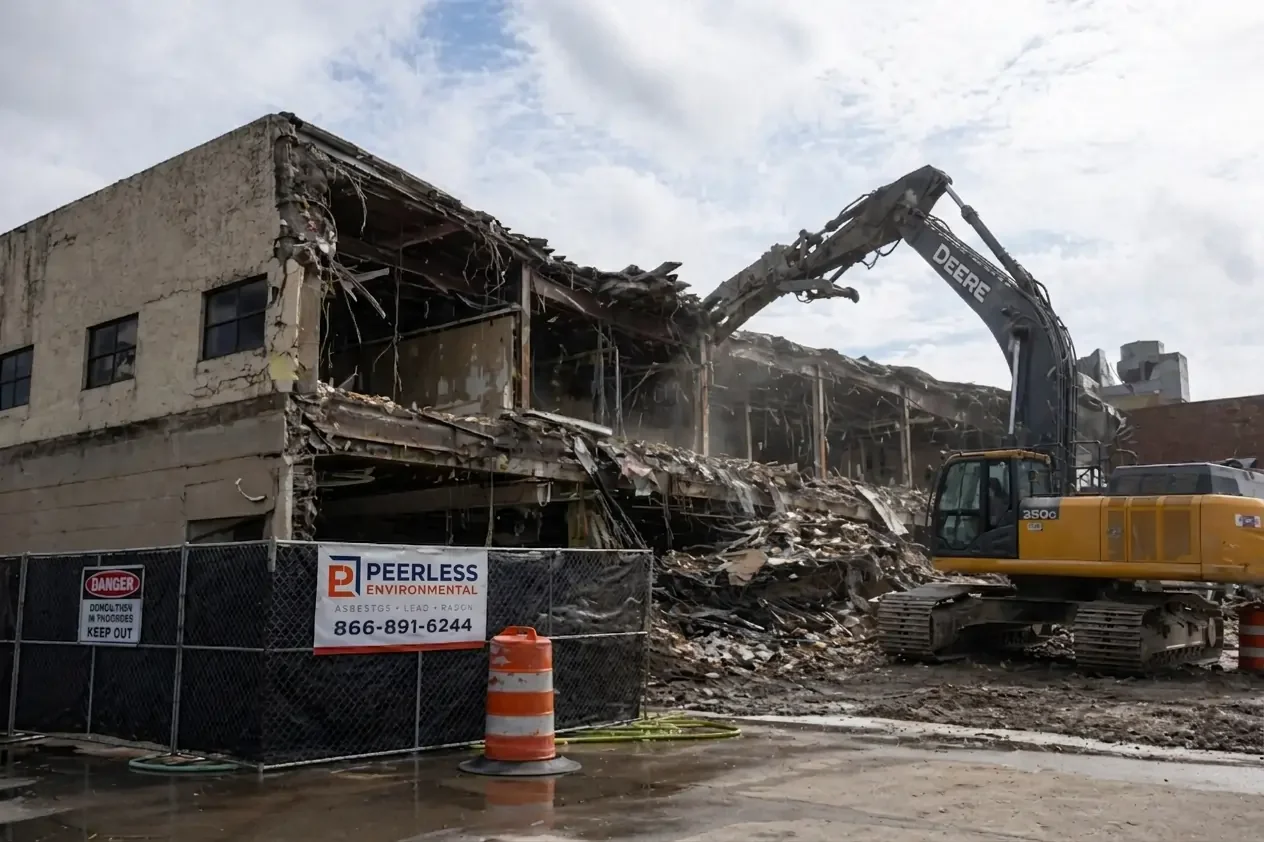
Demolition changes the site fast, which is why clear documentation before and during the work matters.
Why pre-demolition photography creates a defensible project baseline
Written notes are important. Testing data is important. Scope documents are important.
Still, photos do something those records cannot do on their own. They show the site exactly as it was before work began.
That matters when questions come up about pre-existing damage, suspect materials, visible deterioration, access limitations, or conditions that may affect how environmental work is planned and performed. A strong set of pre-demolition images helps establish the baseline on day one, before debris, demolition, dust, or disruption changes the story.
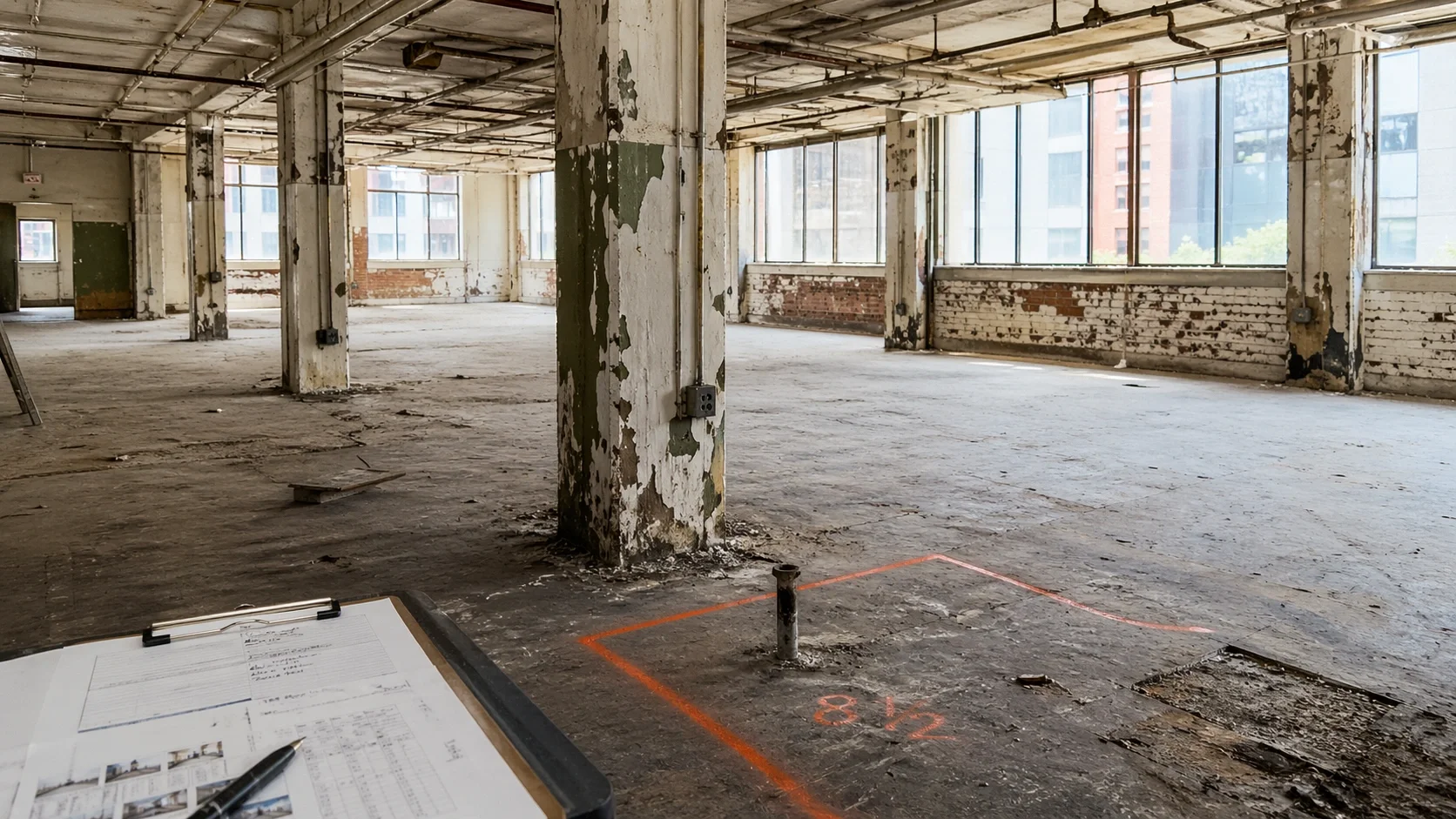
A documented interior baseline helps preserve what the site looked like before demolition, debris, and disruption changed it.
What environmental hazards should be photographed before demolition or renovation
Environmental concerns do not get clearer after demolition starts.
They usually get harder to trace.
In older buildings, visible conditions can point to bigger environmental concerns. Pipe insulation, floor tile, mastics, ceiling texture, painted trim, utility penetrations, staining, damaged wall systems, crawl space conditions, and older mechanical components can all matter. Once demolition begins, that context disappears.
Asbestos-containing materials and suspect building materials
If asbestos-containing materials were visible and intact before work, that should be documented.
Lead-based paint, deteriorated surfaces, and dust risk areas
If lead-painted surfaces were already peeling or damaged, that should be documented.
system components, staining, and other site conditions
If there were staining patterns, patched areas, prior repairs, or system components tied to moisture issues, that should be documented too.
You do not want to argue later about what was there when you had the chance to show it clearly at the start.
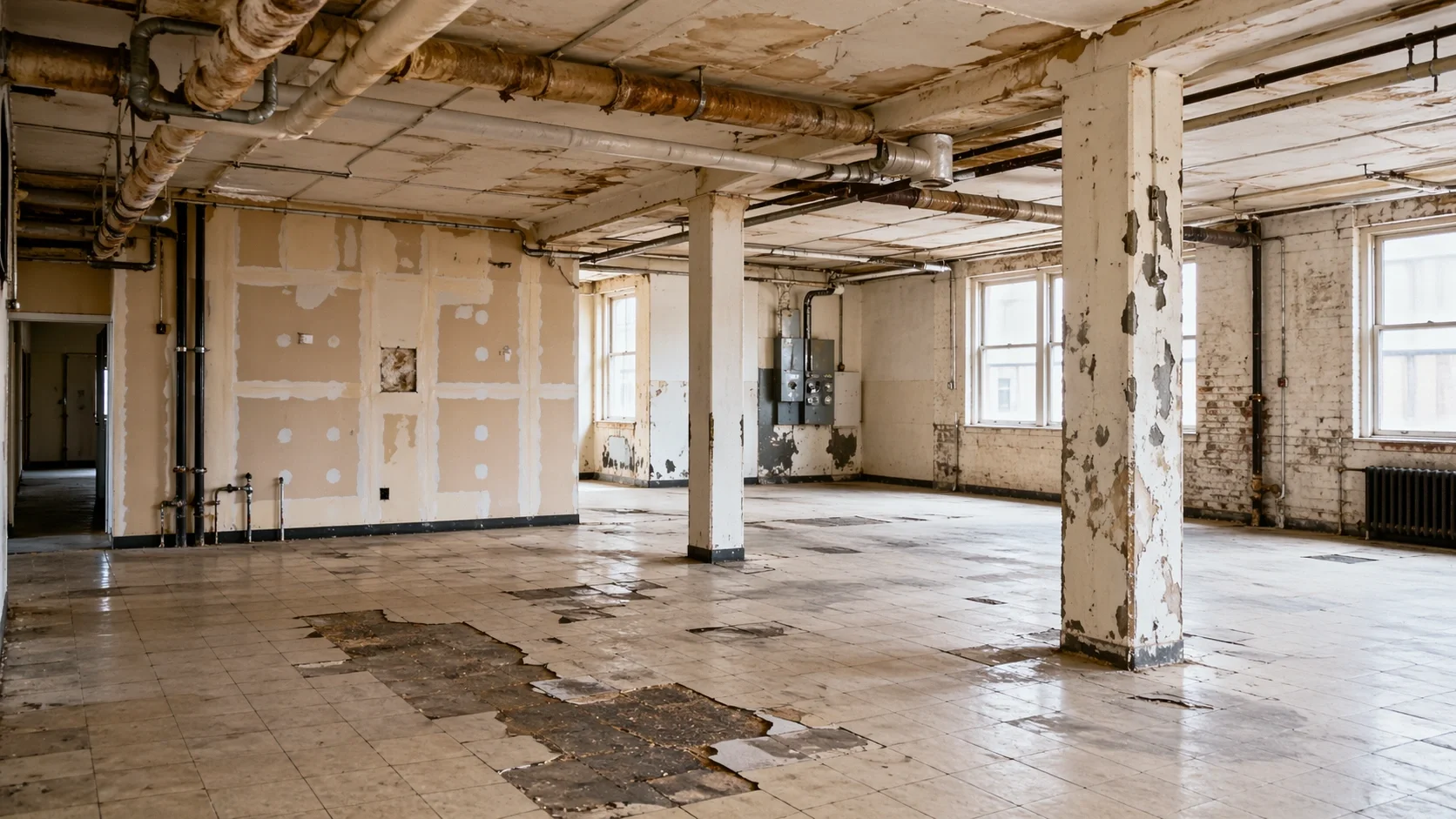
Before renovation begins, wide interior images help establish the original condition of the space and support a more defensible project record.
How construction documentation photography protects owners, consultants, and contractors
Owners benefit because they have a clearer record of the property before disturbance.
Consultants benefit because site conditions are easier to tie back to reports, observations, and recommendations.
Contractors benefit because work areas, access points, and visible hazards are documented before conditions change.
Project teams benefit because when questions come later, they are not relying on memory.
That is the part people underestimate. Jobs move fast. Different trades come and go. Conditions change by the hour. Weeks later, someone may ask what was there before demolition or whether a material was already damaged. At that point, the team either has a record or it does not.
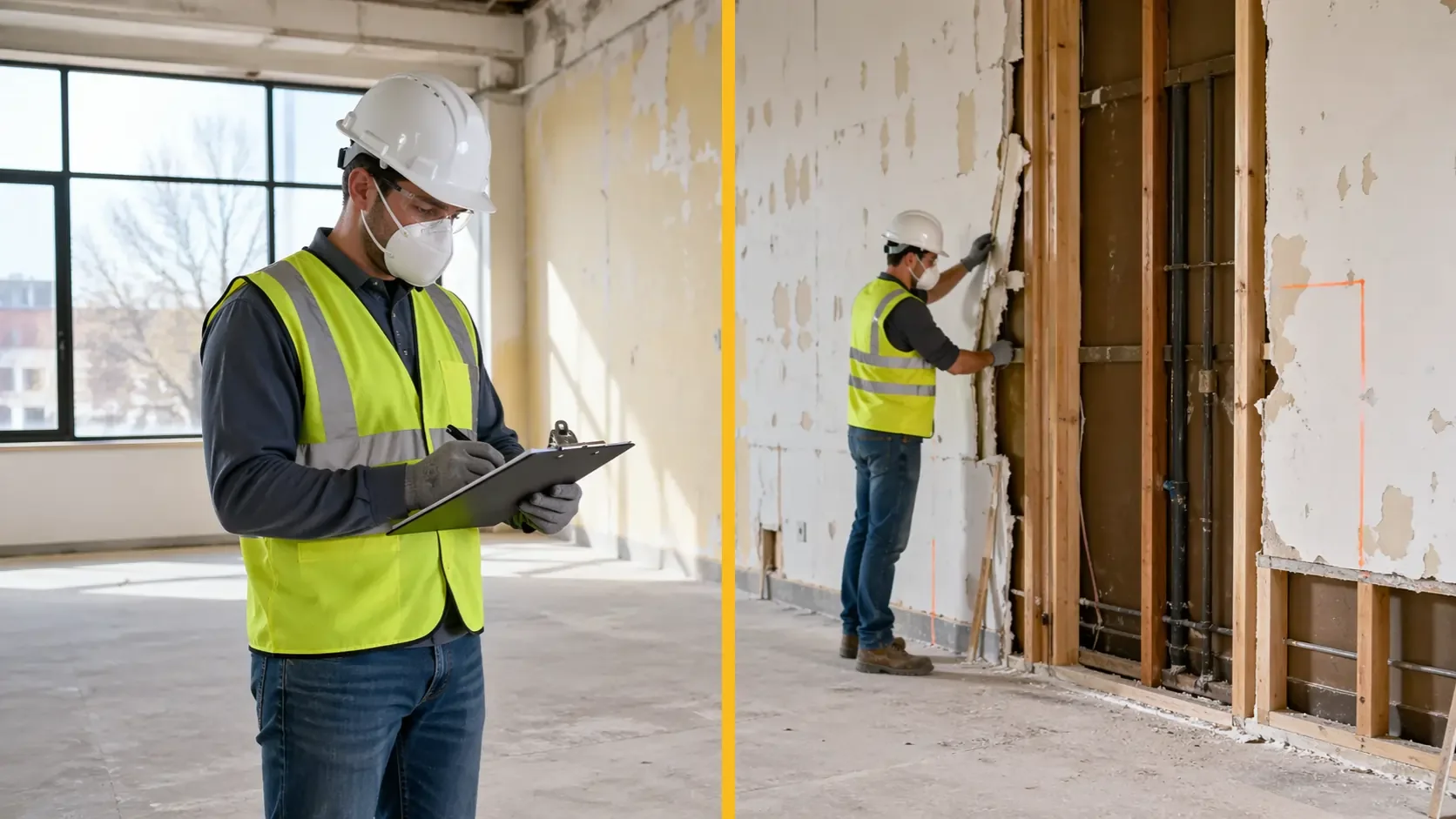
Once walls are opened, hidden systems and conditions come into view, making accurate jobsite documentation even more important.
Drone photography vs. ground-level pre-demolition photography
Aerial photography has value. It can show the overall site, access routes, roof conditions, exterior layout, drainage patterns, and surrounding context.
That is useful.
It is not a substitute for close ground-level documentation.
Environmental concerns are often found in the places a drone cannot meaningfully capture. Tight corners. Interior transitions. Crawl spaces. Utility runs. Mechanical rooms. Window trim. Pipe chases. Penetrations. Surface damage. Material changes. Those are the areas where detail matters, and detail is what supports the record.
Why pre-demolition photography matters for accountability and risk reduction
Pre-demolition photography is not a box to check.
It is a practical layer of protection.
It helps teams plan better. It helps support findings. It helps reduce confusion. It helps answer hard questions with something more solid than opinion. Most of all, it preserves the condition of the site before the work changes it for good.
When a structure is opened up or torn down, the original evidence does not come back. The photo record becomes the one thing the team can still point to and say, this is what was here, this is what it looked like, and this is what we were working with before the project moved forward.

Professional pre-demolition photography helps capture exposed systems, material conditions, and jobsite context before the project moves forward.
FAQ about pre-demolition photography
-
A: Not in every case as a strict legal requirement, but it is a strong best practice. From a project and risk standpoint, it is one of the smartest steps a team can take before renovation or demolition begins.
-
A: Focus on visible suspect materials, damaged surfaces, painted components, pipe runs, insulation, flooring, crawl spaces, utility penetrations, staining, exterior elevations, access points, and any conditions that may affect environmental planning, removal, or compliance.
-
A: Basic phone photos are better than nothing, but they are often inconsistent, incomplete, and lacking the clarity needed for a serious project record. A deliberate, professional documentation process is much more reliable when the stakes are higher.
-
A: No. Drone images are useful for overall context, but they do not replace close documentation of the specific building materials and conditions that matter most in environmental work.
Schedule pre-demolition photography before the site changes
If a project is heading into renovation or demolition, do not wait until questions come up to wish you had better documentation.
Pre-demolition photography gives owners, consultants, and contractors a clearer record of what existed before work began. That record can support planning, strengthen reporting, and help protect the project when conditions are questioned later.
When the structure changes, the photographs become the baseline that remains.